"Mentally, I live in two countries": mastering the art of building a community abroad
Since 2025, Mozaika Social Hub at 23 Wita Stwosza Street in Gdańsk has served as a welcoming haven for those with migration backgrounds who have chosen Pomerania as their new home. Multiple times a month, Mozaika brings this vibrant, multicultural community together through engaging integration events. Here, a dedicated team of specialists offers free Polish language classes, legal and psychological support, and career counseling—and above all, something that […]
Od 2025 roku na Wita Stwosza 23 w Gdańsku działa Location & Contact – przestrzeń dla osób z doświadczeniem migracji, które zamieszkały na Pomorzu. W Mozaice kilka razy w miesiącu odbywają się międzykulturowe wydarzenia integracyjne, a zespół specjalistek i specjalistów prowadzi bezpłatną naukę języka polskiego, porady prawne i psychologiczne, doradztwo zawodowe, a przede wszystkim coś, czego w Polsce systemowo wciąż jeszcze brakuje: empatycznego podejścia do drugiego człowieka.
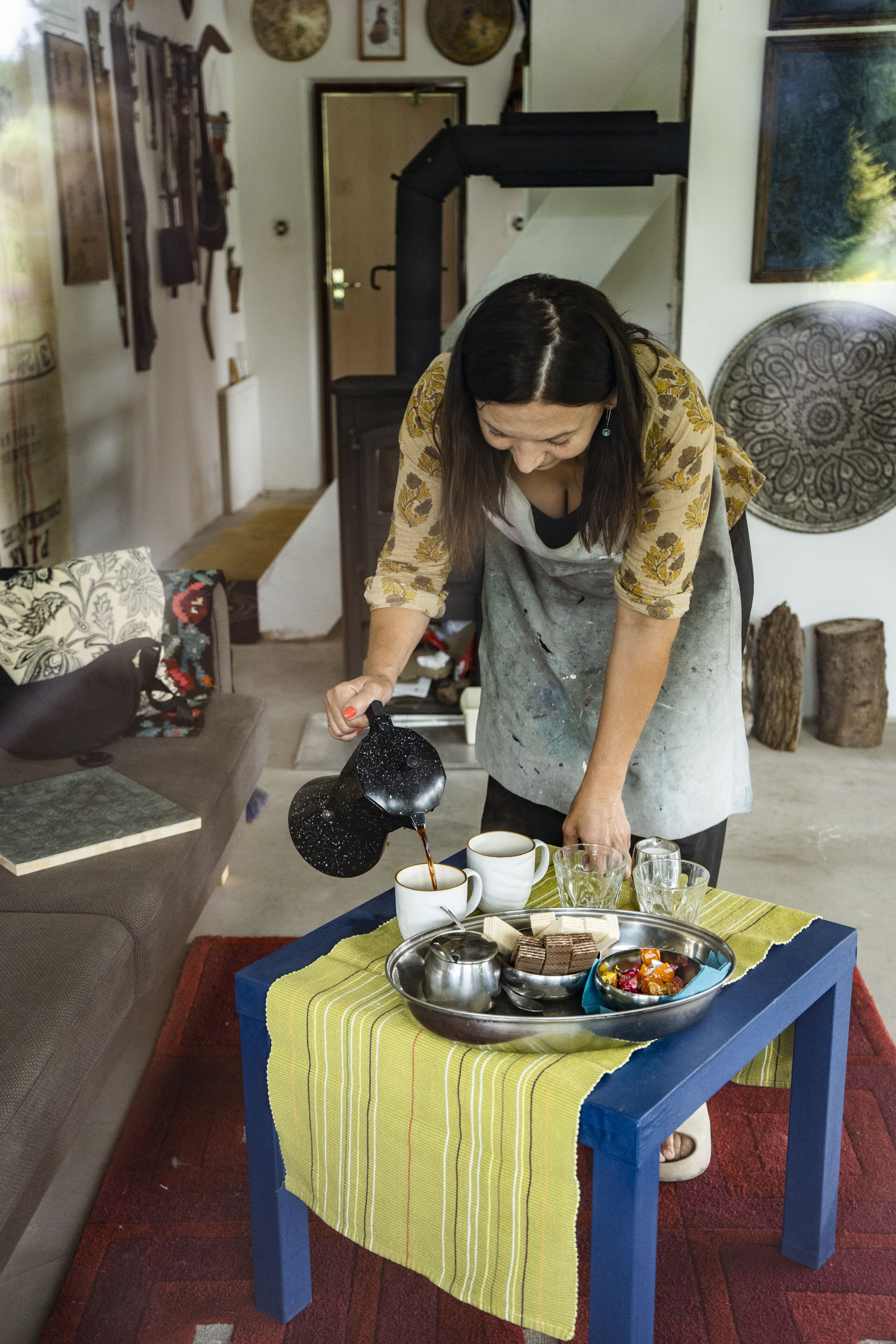
We are gathering the stories of immigrants and newcomers among us. A colleague from the project originally brought Dana and me together. Little did I know that I was about to spend a deeply inspiring, rain-soaked July morning in her picturesque art studio just outside Gdańsk—or that I would leave holding a true masterpiece, generously given to me as a gift.
Aleksandra Wasilczuk: Thank you for agreeing to this interview. Could you please tell me where you come from and how you found your way to Poland?
Dana Yakymchuk: I’m from Lviv. I never planned to move away for good or build a life abroad, but as they say—never say never.
After changes in my personal life, I met my husband, who is from Poland, and we’ve been together for over seven years now. Moving wasn’t an instant decision for me: my children weren’t yet old enough to live on their own, and I had my career to consider. Eventually, all the pieces fell into place, and I made the leap to move here.
Building a long-distance relationship and making the choice to relocate to a whole new country sounds like a daunting endeavor. How did you know he was the one? 🙂 🙂
Intuition. We actually have a captivating piece of family history connected to this place. My great-grandmother's sister and her husband moved to Gdańsk back in 1937 or 1938, so the city’s name was always echoing in the background of my life. I always thought to myself that I should visit one day. And then I met him—a sea captain of the "White Sails" from Gdańsk. Sparks flew instantly. Right from the start, there was this lovely, radiant warmth to him. We were both mature adults, each carrying our own baggage and past experiences, not all of them easy. Naturally, we faced our share of hurdles—linguistic, cultural, and everything in between. At first, there were even silly misunderstandings and arguments simply because our languages sound so deceptively similar, yet a single shared word can carry completely different meanings.
How do you communicate now?
At the beginning, we had an agreement that we would both learn each other's language. I spoke Ukrainian, he spoke Polish, and we understood every word. By now, speaking Polish to everyone has become second nature to me... except when it comes to my husband. To him, I still speak in my mother tongue.
Do you ever find yourself thinking in Polish?
Yes, absolutely. In everyday life, the Ukrainian words sometimes slip away from me now. When I talk with my children or friends back in Ukraine, I find myself weaving Polish words into the conversation. It's likely because the two languages are so closely intertwined, unlike English and Polish. That very resemblance is a double-edged sword: on one hand, it eases everyday communication, but on the other, it makes truly mastering the language more trickier. The underlying structure is completely different—that was quite a revelation for me.
That’s certainly an intriguing challenge.
Challenges are vital when you're an adult. When you learn, think, and give your mind a good workout, you simply feel better in your own skin. I'm truly grateful that a love for learning has always been in my nature.
Karolina [Polish teacher in Mozaika] once said that they love working with mature adults because their motivation is unmatched. It’s nothing like being back in school—you want to learn because you genuinely need to.
How does your life look right now?
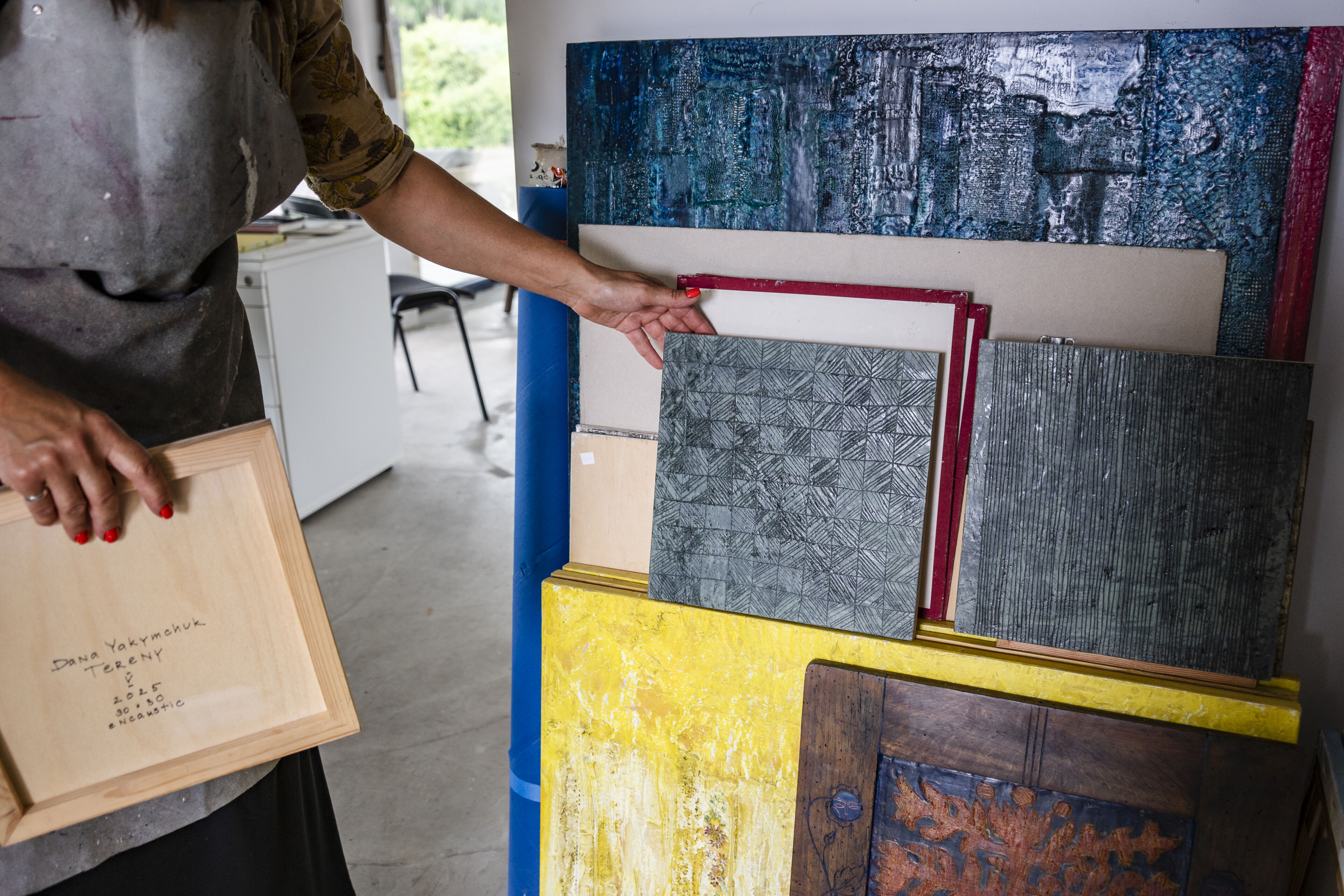
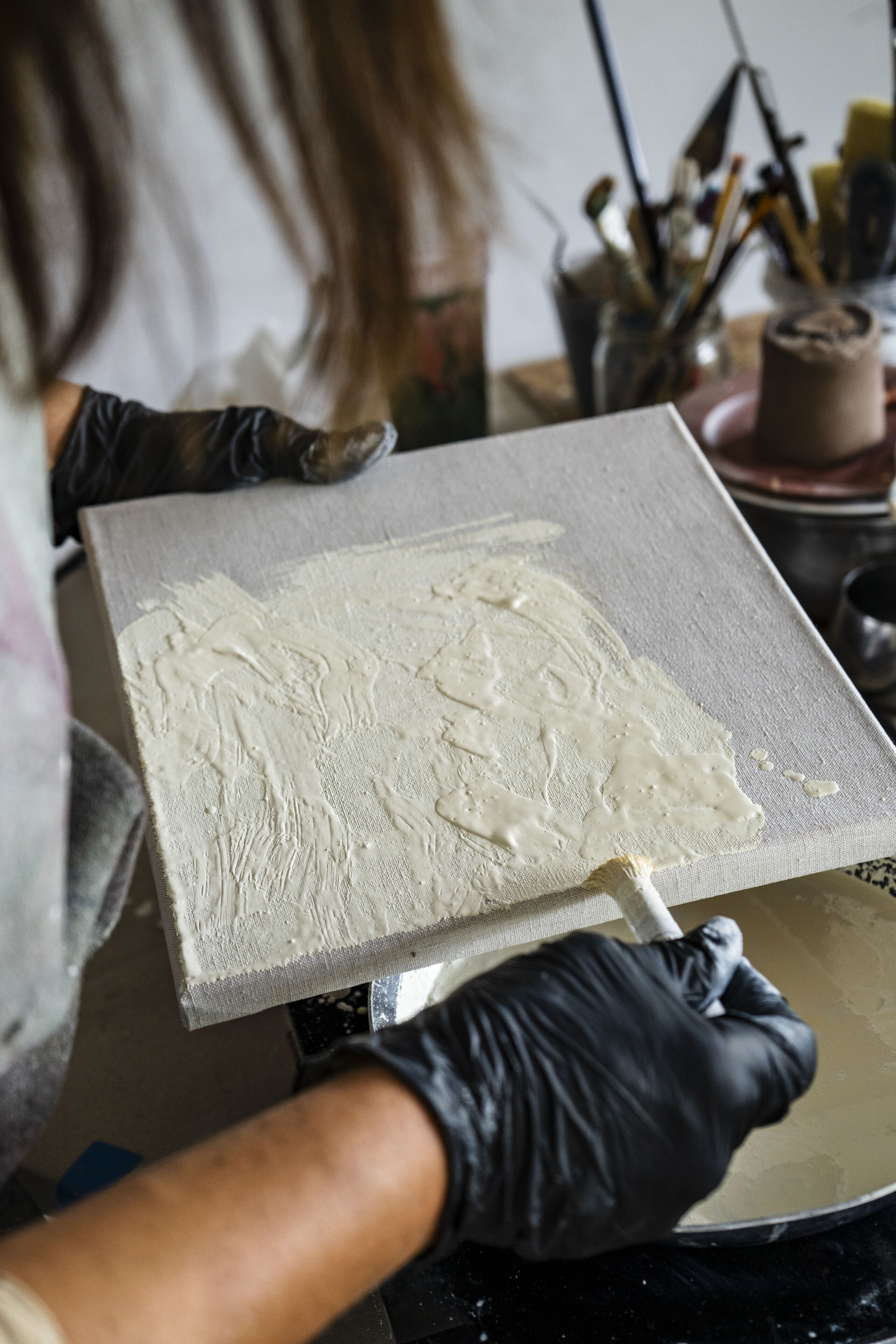
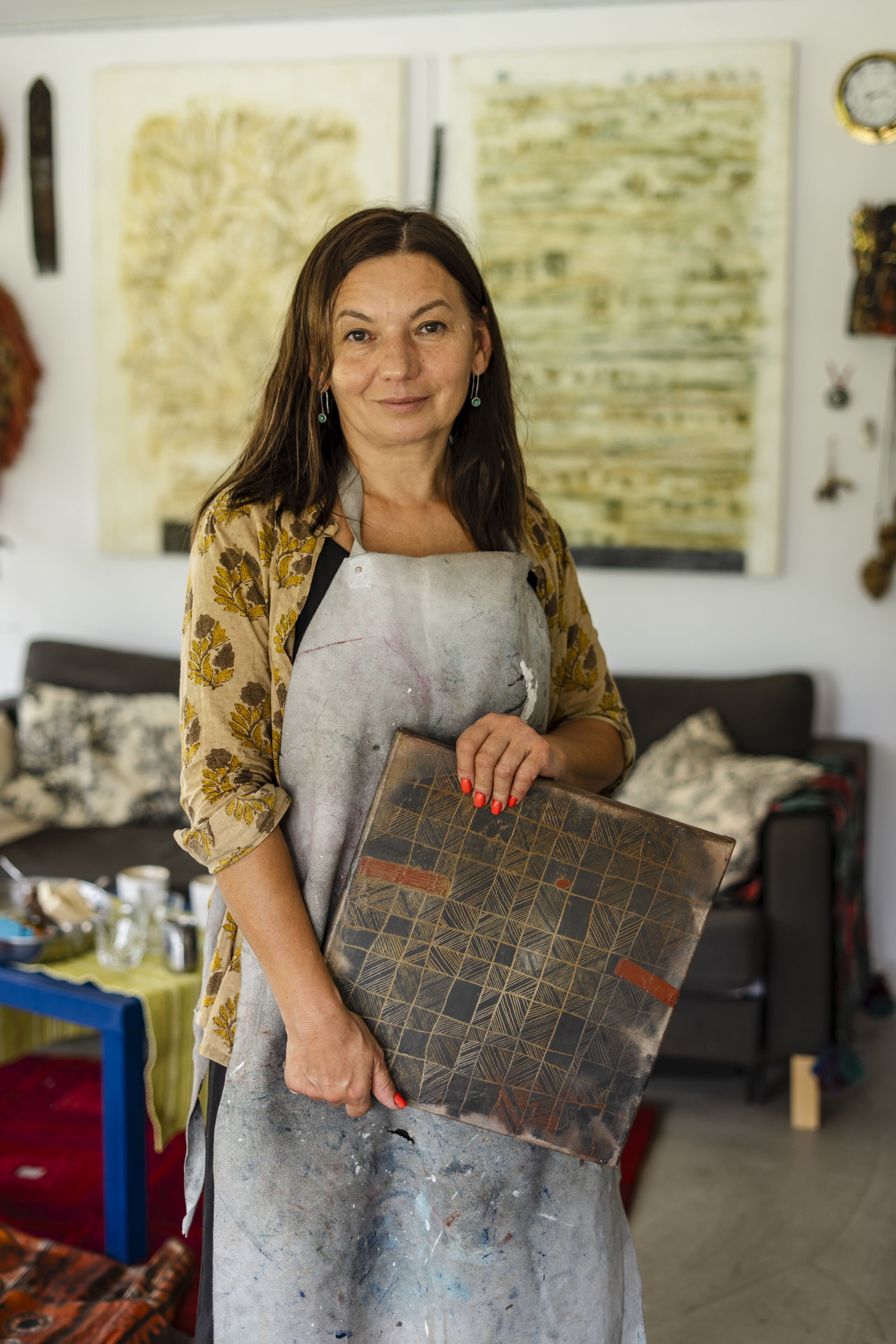
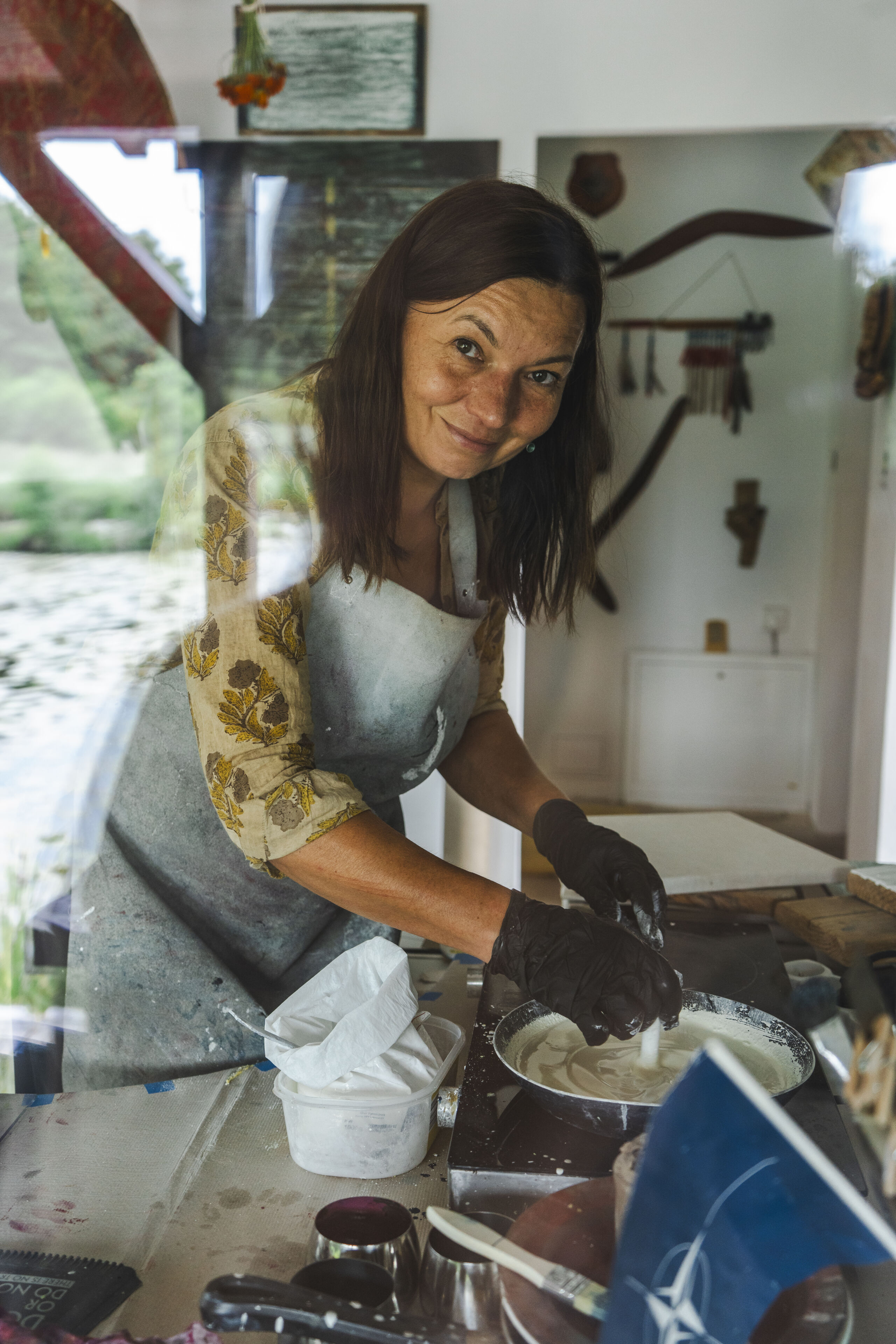
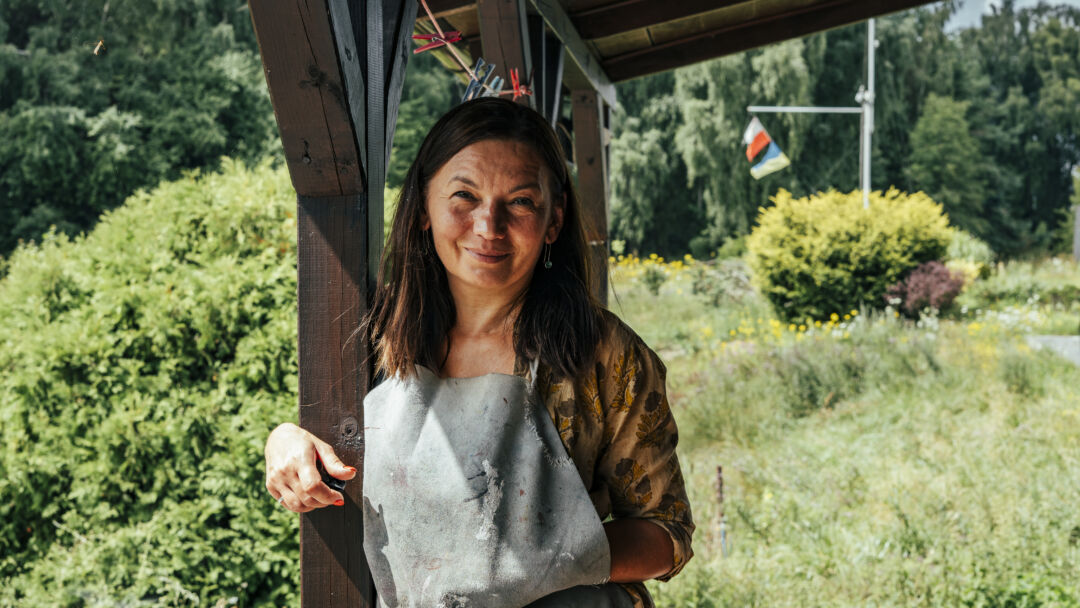
I immerse myself in my artistic work. I have a home studio where I paint my canvases and organize exhibitions—both my own solo shows and collaborative projects with fellow artists.
I was fortunate enough to right away meet a friend of my husband, a professor at the Academy of Fine Arts. Thanks to her, I was introduced to a vibrant network of artists across Gdańsk and Gdynia.
Surely, if I had arrived under different circumstances, or if I had nowhere and no one to go back to, it might have been easier to say: I am here now, and this is where my life will unfold. But as it stands, I still have true, cherished friends and deep connections back home—wonderful people in my life. Sometimes, fully stepping into a new life here can be challenging simply because I still hold such a beautiful place in my heart over there.
So I live—or mentally exist—between two countries, and that’s definitely a struggle for me. My husband keeps telling me: "You haven't fully let go; you're not truly building your life here."
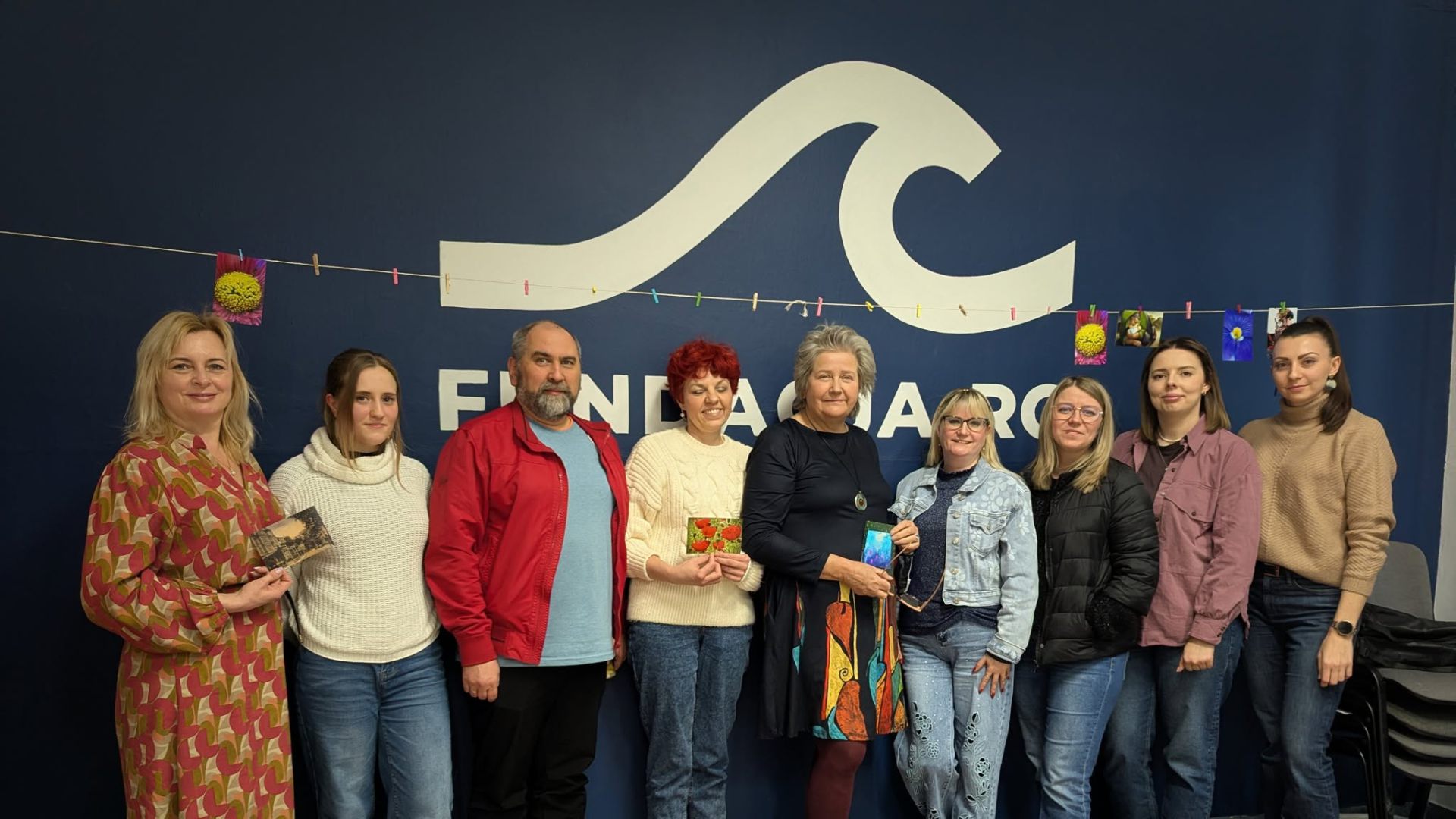
Since March, I’ve been coming to the RC Foundation, which marked my step into a more active community life here on the ground. When I first arrived, it was to join my husband, so I naturally fell into his circle of friends. It was great, and most of them accepted me—some more warmly than others—and eventually became my friends too. But deep down, they were still his friends. At the foundation, I’ve met so many new people, creating a network that belongs purely to me. It brought a sense of genuine connection and community that I didn't even realize I was longing for.

Did you pack up your entire studio and bring it with you from Ukraine, or did you rebuild everything here from the ground up?
You know, the most essential things we possess are carried within our hands and inside our minds, because physical materials can always be acquired or bought. Your skills remain with you forever—a truth that shines even brighter in today’s world, where people are so often stripped of everything they own. But what abides in your head, your heart, your emotions, your wisdom, your habits, and your education—that stays with you always. It isn't about having a specific tool or material; it's about the depth of your vision. Everything else can be packed up and transported back and forth.
How often do you travel back to Ukraine?
Once every two or three months. Sometimes for family matters, sometimes to coordinate artistic events and exhibitions, and other times for volunteer work. We take the car and transport essential supplies over the border.
Tell us about your art.
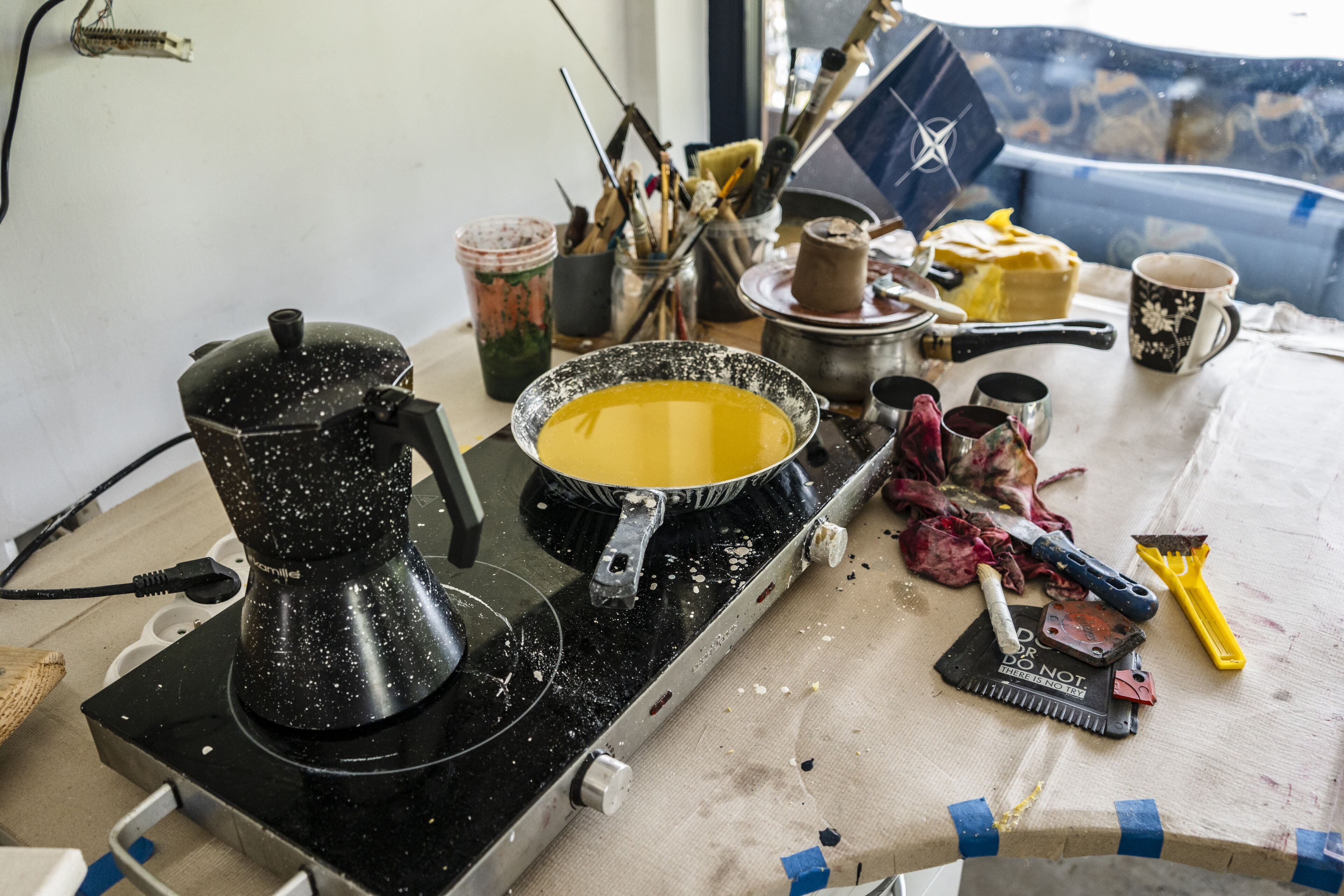
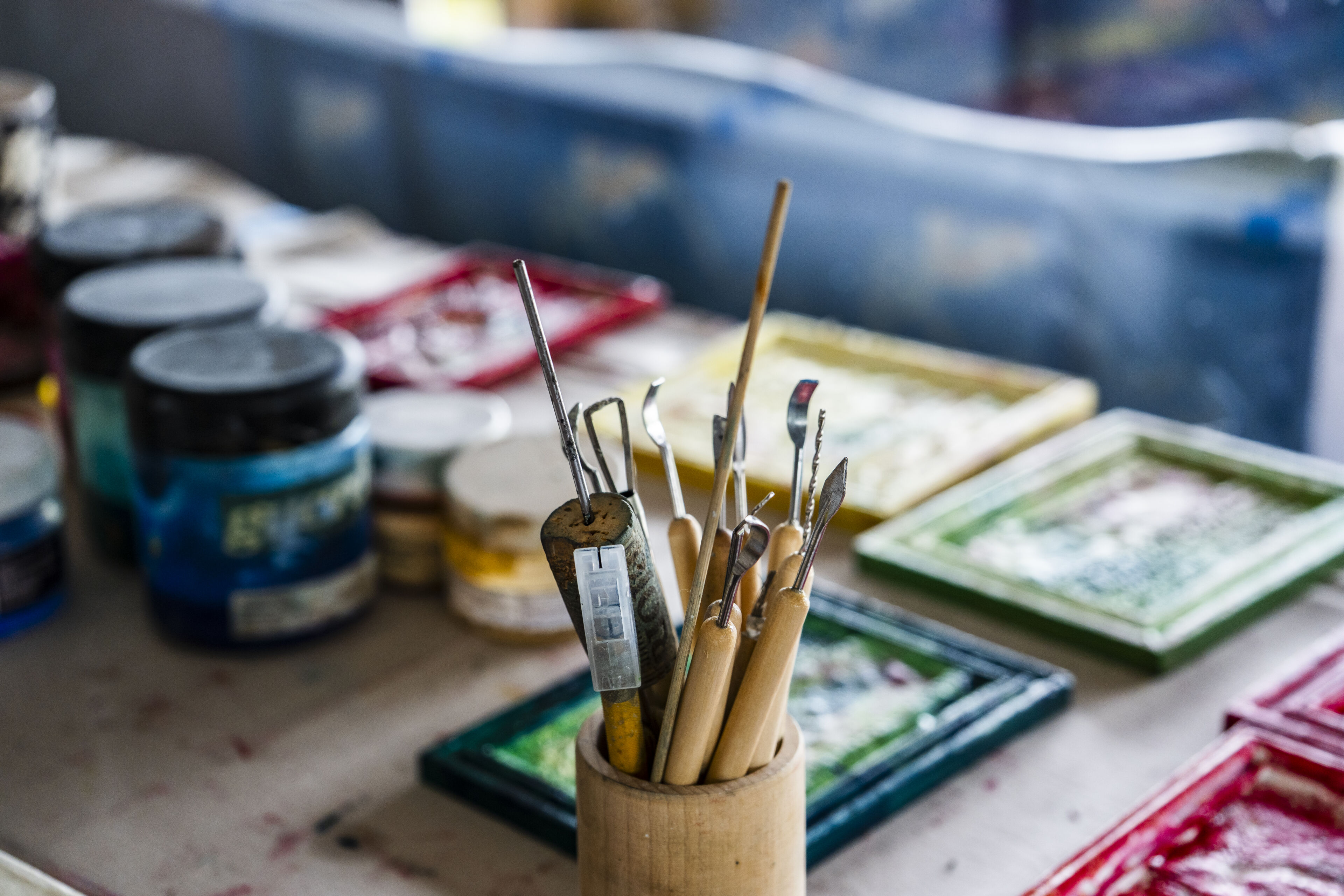
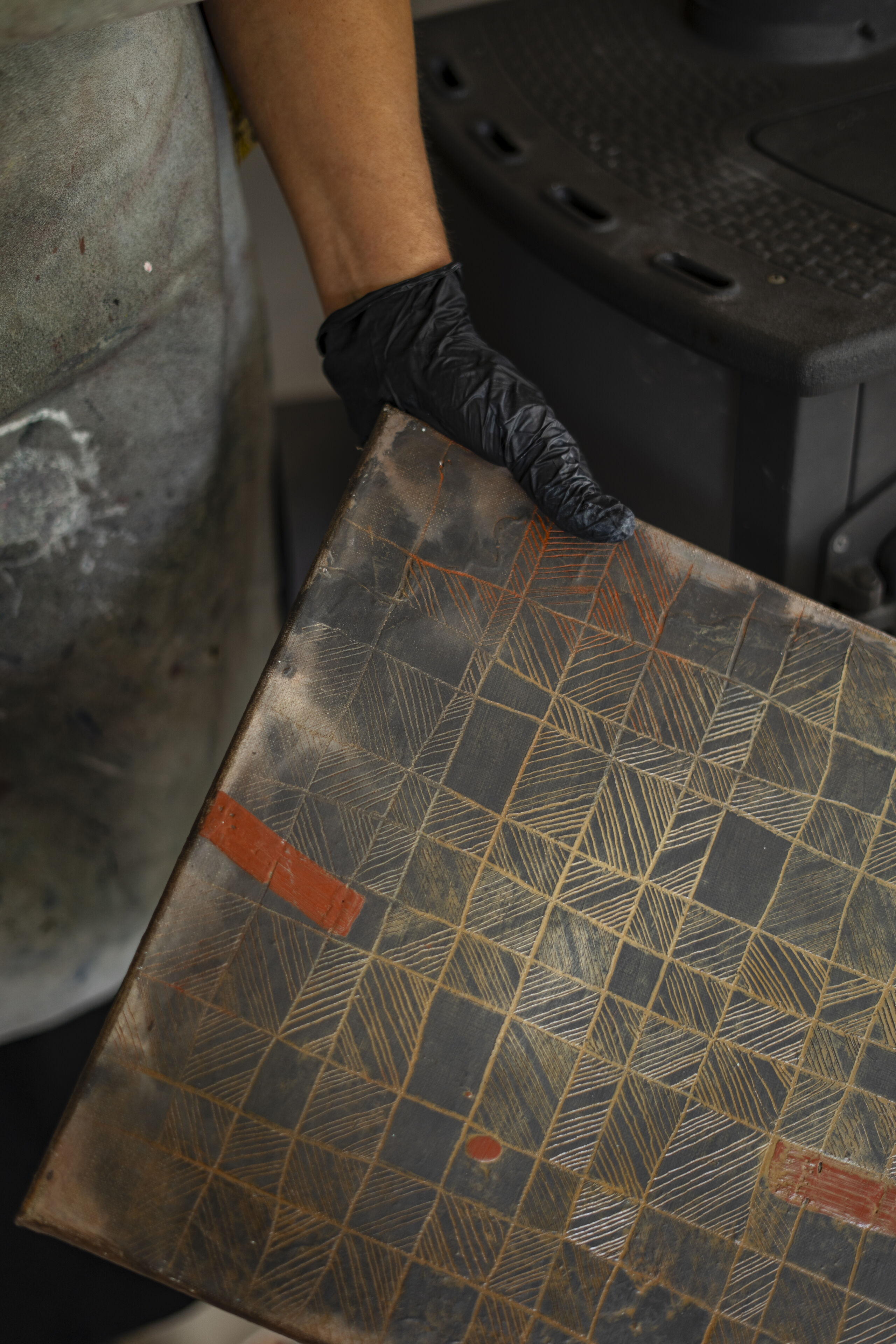
It isn't traditional painting by any means. Lately, I’ve been working with a technique known as encaustic, which is rarely practiced today. In antiquity, artists discovered that combining beeswax with pure pigment creates a blend that can be applied hot, directly as paint. You apply it using brushes and spatulas, resulting in a surface remarkably resilient to sunlight. You might recall the Fayum mummy portraits from art history—those striking funerary depictions from ancient Egypt. They’ve endured to this day with their vibrant colors virtually unchanged.
Earlier in my career, I spent a lot of time working with batik—painting with hot wax on textiles. The wax itself was so visually stunning that I always felt a pang of regret melting it away; I truly missed its presence in the finished pieces. I was also familiar with the art of pysanka egg-decorating, a traditional craft deeply rooted in our culture. Eventually, all these influences merged. For the past fifteen years, the vast majority of my output has been encaustic art, though given a contemporary spin—blending wax with textiles, intriguing found objects, and rich oil paints. It’s an intensely rewarding creative journey for me. The beeswax itself holds a personal touch: it comes straight from my family’s apiary back in Ukraine.
I’ve always felt drawn to abstract forms. I love works that pose questions rather than hand out answers—art that awakens the viewer's imagination and invites them into a dialogue, rather than spoon-feeding them a single, rigid meaning.

Where do you look for inspiration?
I draw deep inspiration from folk art—both Ukrainian and traditions from around the globe. Delving into the symbolic dimension of art has always fascinated me. Behind every single element of an ornament in ceramics or textiles lies a hidden message, and once you learn to decode it, you begin to experience these pieces in a completely different light. Historically, ornamentation served as a form of written script—a visual language used to pass down history, lore, and essential wisdom.
Today, much of that knowledge has faded or been cast aside, lingering only in the domain of specialists. Yet, even without formal study, we still intuitive grasp its meaning on a deeper, subconscious level.
Is there a specific symbol or cultural element that holds profound importance for you?
It’s hard to single out just one. But if I had to choose, I most frequently return to the symbol of the Earth, which takes the graphic form of a stylized diamond. I even curated two exhibitions titled Grunt—a word that carries the exact same pronunciation and grounding meaning in both Polish and Ukrainian. That concept gave birth to a series of over a dozen distinct pieces. Grunt. Bo w języku polskim i ukraińskim brzmi jednakowo i ma to samo znaczenie. Powstało seria kilkunastu prac.
How have you found your footing as an artist here in Poland? What felt effortless, and where have you encountered hurdles?
It has felt quite good overall. In the beginning, it was an incredibly exciting shift. When you stay in one place for too long, your emotional landscape and creative themes can become fixed. Shaking things up was essential for me because it pushed me to embrace fresh challenges—something new, something different.
Observing how artists operate here was eye-opening. I gained a completely new perspective on the creative process itself. It’s no longer just about what you paint, but articulating: What is this truly about? Why this concept? That conceptual rigor was missing when I was pursuing my degree. I possessed the technical mastery and knew various methods inside out, but I hadn't fully interrogated what I actually wanted to say or how to explain it. I absorbed that mindset here, alongside my peers, who offered generous guidance and support. It’s something I treasure, because in contemporary art, the core purpose is delivering a meaningful message through your medium.
Visual art allows you to communicate incredibly weight ideas. The human brain processes visual input in the blink of an eye—far faster than spoken or written language, which demands more time and focused intellectual effort from an audience. Visual art hits you all at once.
I have to ask—what message are you striving to convey through your art?
It’s about discovering beauty within the quietest details of everyday life—focusing on things that are genuine, natural, and true. Through folk art, I explore a vital sense of identity: knowing who you are and honoring where you come from. It’s about cultivating deep respect for your roots, your loved ones, and the people who surround you. But it’s equally about respecting the culture of whichever country you choose to call home or travel through. When genuine respect forms your foundation, toxic mindsets like xenophobia, chauvinism, or ranking people into arbitrary hierarchies simply have no room to take root. Respect begins within oneself and radiates outward to embrace others. Every single place, country, and culture on this earth holds something profoundly beautiful worth celebrating.

So beauty is everywhere?
It depends on what you are looking for. If you seek out the good, the beautiful, and the honest, that is what you will find. If you choose to look for the bad or the ugly, you will notice whatever you prioritize in your mind.
When the full-scale war broke out, my husband and I drove straight to the border. I saw Polish people standing there holding hand-painted signs offering help—one offering to take three people, another taking two; women arriving with homemade sandwiches and warm soup. I will never forget that, and my gratitude is lifelong. I truly believe those moments of face-to-face connection were deeply genuine and left an indelible mark on everyone who was there. Today, we hear all kinds of shifting narratives surrounding refugees, but I believe this will pass; it's merely political posturing.
Are you referring to the growing anti-Ukrainian rhetoric? Have you experienced it personally?
I don't personally know anyone who genuinely holds those anti-Ukrainian views. None of my friends or acquaintances think like that, though of course, such opinions do exist out there...
You know, that time was so bittersweet... On one hand, it was utterly heartbreaking, but on the other, it was profoundly beautiful. It was a transformative moment, I think, for everyone involved. In crisis, people reveal their finest instincts, and it’s important to realize: I am good, I am compassionate, I am human. How things evolve long-term matters less than that pure, unfiltered impulse to help.
Looking ahead, I hold onto the hope that one day the border between our nations won't need to be so heavily guarded. That we will move freely between our countries just like anywhere else in Europe. I hope our nations will collaborate far more than they compete, building a shared sanctuary for culture, business, travel, and human connection.
I am an incurable optimist—perhaps even an unwarranted one. Even when there are no obvious signs pointing toward it, I stubbornly choose to believe that everything will turn out well.
And to circle back to those symbols embedded in art: we are the ones who create these symbols. We infuse them into our work, and someone, somewhere, decodes them. Perhaps that is our ultimate purpose as creators—to weave good intentions into everything we make. Even if those thoughts remain subtly hidden, someone will absorb them on a subconscious level.
Portions of the polish text retain the original interview transcript format.
Photos: Aleksandra Wasilczuk
Photos: Aleksandra Wasilczuk Originally published for Magazyn Pomost. Magazynu Pomost.