How to Survive in Tczew (An Instruction Manual for Those Whose Lives Have Turned Upside Down)
In Tczew, a simple rule applies: before we ever dive into "procedures," we check if the person has eaten and whether they'd like a cup of tea. Only then do the acronyms, official stamps, and other delights of modern bureaucracy come into play. It might sound funny, but around here, the electric kettle is an essential part of the support system. And it works.
In Tczew, a simple rule applies: before we ever dive into "procedures," we check if the person has eaten and whether they'd like a cup of tea. Only then do the acronyms, official stamps, and other delights of modern bureaucracy come into play. It might sound funny, but around here, the electric kettle is an essential part of the support system. And it works.
I work at the To i Co Foundation and the Heca Social Cooperative. Anyone engaged in supporting refugees—someone in a role like mine—handles things across every stage and on every level: from the Polish-Belarusian border to foreign national centers, from paperwork and medical care to navigating local shops. And when the situation demands it, emergency logistics as well: journeys into places like Belarus to retrieve those simply incapable of crossing the green border—pregnant women, toddlers, unaccompanied minors, and the infirm. These are the moments when what truly matters in human relationships comes into sharp, undeniable focus: dignity, an enduring serenity of spirit, and standing shoulder to shoulder with one another in the face of fear, uncertainty, and oppression.
Tczew is small enough that everybody knows who bakes the best cake and who is forever forgetting their keys.
Yet, it’s large enough to offer a place where you can begin again. Our community café, Jasna—run by the Heca Social Cooperative—and the Migrant Info Point of the To i Co Foundation are separated by just a few streets. Between them floats the most important invitation in the world:“Hey, drop by.”Not as a polite formality, but in its truest sense: “There is a seat here with your name on it, where you can simply sit down and breathe.”
Hussein: Surgical Student and Nighttime Bike Ninja
Hussein (a pseudonym, from Sudan) always greets me as if he were hosting a bright morning radio show:
"Hi! How are you doing? Did you have a good day?"
And it is nothing short of incredible, because Hussein has walked through experiences that would leave many without the strength to utter a simple "hello" to anyone. Yet he remains wonderfully cheerful. Attentive. At times, so deeply captivated by life's subtle details that you find yourself viewing the world anew through his eyes.
"Why do you have so many types of bread?" he once asked, driven by the genuine curiosity of a child.
And suddenly, it becomes clear: the deepest secrets of human integration aren't encoded in legal statutes, but found right inside the bakery.
Before arriving in Poland, he was in Belarus, waiting "for his turn." It sounds like a waiting room at a local clinic, except it was a waiting room in a place where people returned from the forest battered, wounded, and terrified. Hussein didn't avert his eyes. He helped: cleaning wounds, applying dressings, offering calm reassurance. He knew how—he had completed four years of surgical studies.
During that grueling period, he received crucial support from Hope and Humanity—assistance that fundamentally altered the trajectory of his journey. Because of it, he crossed into Poland through a formal border checkpoint and officially requested international protection.
In Tczew, we began as we always do: a cup of tea, a chair, "let's see the document," "here's the deadline," "sign right here." And then Hussein did something entirely characteristic of him: he got straight to work. Furthermore, he works in a rhythm that could catch even a bicycle off guard:
- by night, he relocates public bikes (operating as a sort of urban bicycle ninja),
- by day, he delivers food on a bike (essentially remaining a ninja, just equipped with an insulated thermal bag).
termiczną).
And during his breaks, he plans to resume his medical studies in Poland, practicing every single day... suturing wounds on a rubber patch of synthetic skin. Seriously. He carries a piece of artificial "skin" and a needle, relentlessly perfecting his craft.
Today in Tczew, Hussein has a job, a place to live, and a community around him. You can hear it in the way he says "Hi! How are you doing?"—it isn't just an attempt to be polite. It is living proof that he is truly here. tu.
Mohammed: The Watchful Spirit, Bicycles, Football, and the Message Everyone Waits For
Mohammed (a pseudonym, from Sudan) arrived in Poland by crossing the green border with Belarus. He spent time in a guarded detention center, then in an open center, and when he was finally able to taste a glimpse of "normal life," he headed to Warsaw. In the logic of the world: capital city equals more opportunity. In Mohammed’s experience, it yielded a different formula: capital city equals more people and a silence that aches.
Mohammed had never even heard of Tczew before. All he had was my phone number, passed along by a mutual acquaintance—the way things usually happen around here—and a brief WhatsApp message sent from Warsaw. A few cautious sentences, testing the waters to see if there was an actual human being on the other end: whether he could come, if anyone would help, if it was worth a try. And that is how it all began—not with a grand life decision, but with a tiny phone icon and a simple "hello" sent from a city where he felt deeply alone.
From our very first meeting, it was obvious that Mohammed is not a person who leaves things to chance. He is serious. Watchful. It's as though he carries an internal radar, constantly set to scan: observing, assessing, ensuring that a space is genuinely safe. He doesn't indulge in idle chatter or put on a show. When he laughs, it is brief—but entirely authentic.
At the Heca cooperative, Mohammed works with bicycles. Repairing, tuning, getting them back on the road. It is the perfect vocation for someone with his level of quiet focus: you can't argue with a bicycle—it's either running straight or the wheel is buckled. I love watching him work, because in those moments, his seriousness takes on the appearance of serenity. As if, at long last, something in the world has become predictable.
After work, he plays football with a group of local guys from Tczew. That, too, is a form of integration, just stripped of high-sounding words: nobody here asks for your backstory; they only ask if you're going to pass the ball. And Mohammed passes. When he scores a goal, he doesn't run a triumphant lap of honor—he simply nods, as if saying, "Alright, let's keep going."
And then there is something no one would ever guess about him upon first impression: Mohammed is a magnificent dancer. The very same man who carries himself by day with the vigilance of an airport security scanner suddenly unlocks a effortless grace on the dance floor. It disarms me every single time, revealing that beneath all that watchful caution lives someone who desperately wants to embrace a normal life—and truly knows how.
He also volunteers. Whenever a hand is needed, he steps up without making a grand announcement. He's that type: he shows up, gets the job done, and slips out. Later, when someone asks, "Who sorted this out?" the answer is inevitably:
"Mohammed, of course."
„Mohammed, przecież”.
Yet what stands out most vividly in my memory is a phone call from him. When he rang, his voice held a quality I had never heard in him before: pure, unadulterated joy.
"I got the decision. It's positive. Protection... it's granted!"
He said it as though someone had suddenly turned up the volume on the world. To be precise: a positive decision granting international protection in Poland. He was so happy he was actually laughing out loud—the very same serious Mohammed who usually measures his words so sparingly. In a single sentence, everything was contained: immense relief, the end of living in limbo, and the feeling that the ground beneath his feet had finally stopped shifting.
Shortly after, he returned to his favorite pursuit: learning Polish. Mohammed is the most diligent student I have ever met. He approaches language learning as though his life depended on it—and in truth, sometimes it really does: at the administrative offices, at work, in everyday conversation. He sincerely wants to understand and to be understood.
Today, Mohammed has a job, a home, and a community in Tczew. Not as a special reward. But as a given—a slice of normal life.
Arman: Conversations on the Meaning of Life and Polish Swear Words
Arman (a pseudonym, from Afghanistan) was a soldier. After years of harrowing experiences, his body can trigger an internal alarm long before his mind has time to process, "It's just a noise." His journey to Europe reads like a survival story script: the mountains of Uzbekistan, Belarus, crossing the green border, a guarded detention center, an open center, and ultimately, Tczew.
Then, one day, came the phone call:
"I don’t feel good. My head..."
He wasn't asking for a psychologist. He didn't need elaborate sentences. He simply needed someone to stand beside him until that internal alarm began to quiet down. So we started with the simplest thing in the world: walking. Exploring Tczew on foot works surprisingly well—a stretch of the river, a bit of the town center, a few ordinary streets where nothing happens (which, for some, is the ultimate luxury). Sometimes we just walked and counted how many times one could say, "Okay, it's fine now" within a ten-minute span. Other times, I gave him a practical, low-key tour: this area is quiet, here's a shortcut, here you can turn back, and here is a spot where you can sit down without having to prove a thing.
Yet Arman, contrary to first appearances, is not the silent type at all. He is a chatterbox. Truly. Once he gets into a groove, he can discourse on absolutely everything: global affairs, politics, whether humans are inherently good, the meaning of life, and what "normal" actually implies. At times, I felt as if he carried all these weight topics in his pocket like spare change, pulling them out one after another in an endless stream. And I listened, because this too is part of finding one's way back to oneself: being able to talk about things larger than fear.
Later, he found a job at 100cznia. And it was far more than just a job—it became a space where he ceased to be "the new guy" or "the outsider." There, he discovered a community of people with whom he could share a post-shift tea, laugh over silly nonsense, and not have to explain his entire life story from scratch. What mattered most, however, was something deeper: the feeling of belonging, of being valued. Knowing he had a role to play, a piece of the day that carried real purpose. And when that settles in, the mind slowly reclaims its peace.
As an added integration bonus, Arman picked up every conceivable Polish swear word at 100cznia faster than I ever mastered irregular verb conjugations. With a thoughtful look, he once solemnly declared to me that "Polish is hard," right before proving in a single, perfectly structured sentence that there are certain linguistic domains where complexity simply poses no barrier whatsoever.
The Border and Human Rights
These stories begin far from Jasna and the bicycles of Tczew. They begin on the Polish-Belarusian border—a place where the right to seek international protection ought to function precisely when a person is at their most vulnerable. Yet for years, cases have been documented of people being turned back to Belarus without a genuine, individualized procedure. This practice is known as a pushback: a person says, "I am afraid to go back," and yet ends up turned right around.
In March 2025, regulations came into force that temporarily restricted the right to submit applications for international protection along the border section with Belarus. On paper, there are exceptions (including unaccompanied minors, pregnant women, and individuals in poor health)—groups requiring special safeguards. However, monitoring and humanitarian organizations report that the Border Guard does not always honor these exceptions, and pushbacks continue to affect both those outside special protection categories and those explicitly belonging to them.
From a human rights perspective, the core of the issue is simple: protection must work precisely when times are at their hardest—and it cannot depend on how loudly a person can cry out in the middle of a forest, nor on whether they can cite specific statutory articles.
Full Circle: The Kettle and the Message: "Come Over"
At Jasna, the kettle will whistle once again. Hussein will drop by and say, "Hi! How are you doing?" Mohammed will return from the bicycle workshop. Arman will share yet another theory on the meaning of life, throwing in a word you won't find in any textbook. And I will reply to the next WhatsApp message:
"Yes. Come over. We’ll make tea. One step at a time."
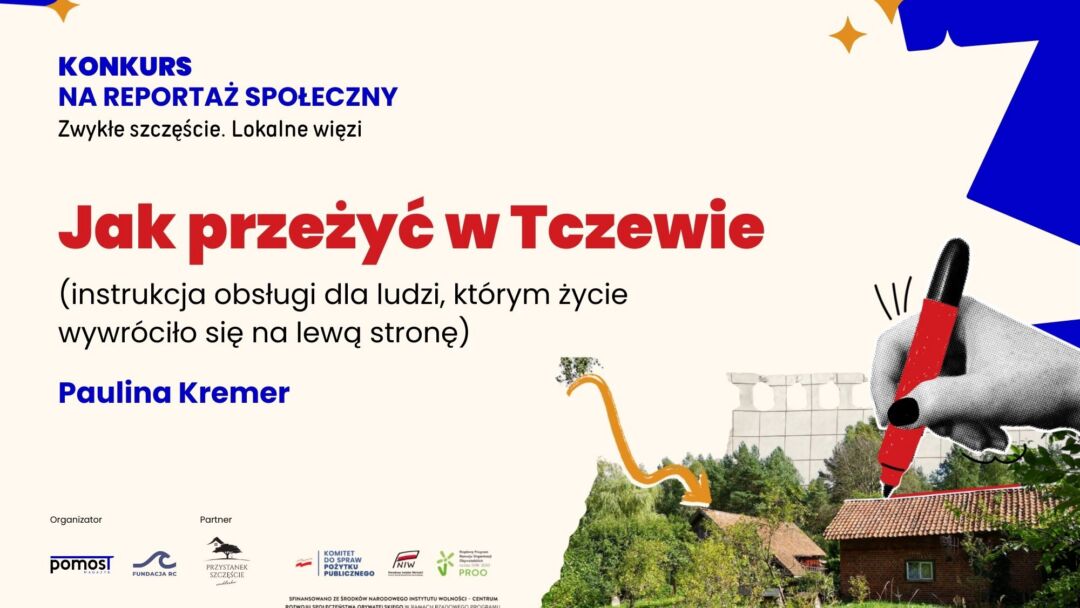
*This text is the winning article in the social reportage competition: Ordinary Happiness. Local Bonds. social reportage competition:Ordinary Happiness. Local Bonds.
Published in Magazyn Pomost on December 11, 2025.